$800 to $3,500
One radiator, caught early
- Extraction and spot drying
- Floor mats on hardwood
- Two to four days
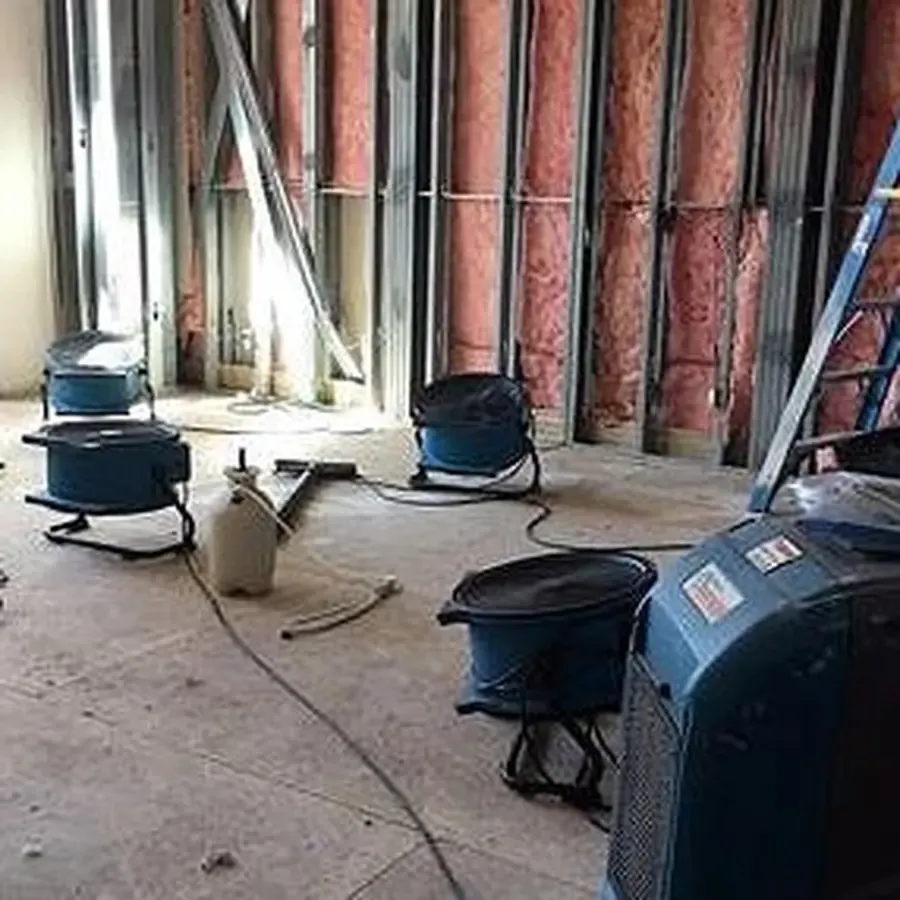
Old steam and hot-water systems leak slowly at valves, vents and boiler fittings. The drying team extracts the water, dries hardwood with floor mats and checks the ceiling below before damage spreads.
(888) 629-3140Radiator leaking on the floor? Call now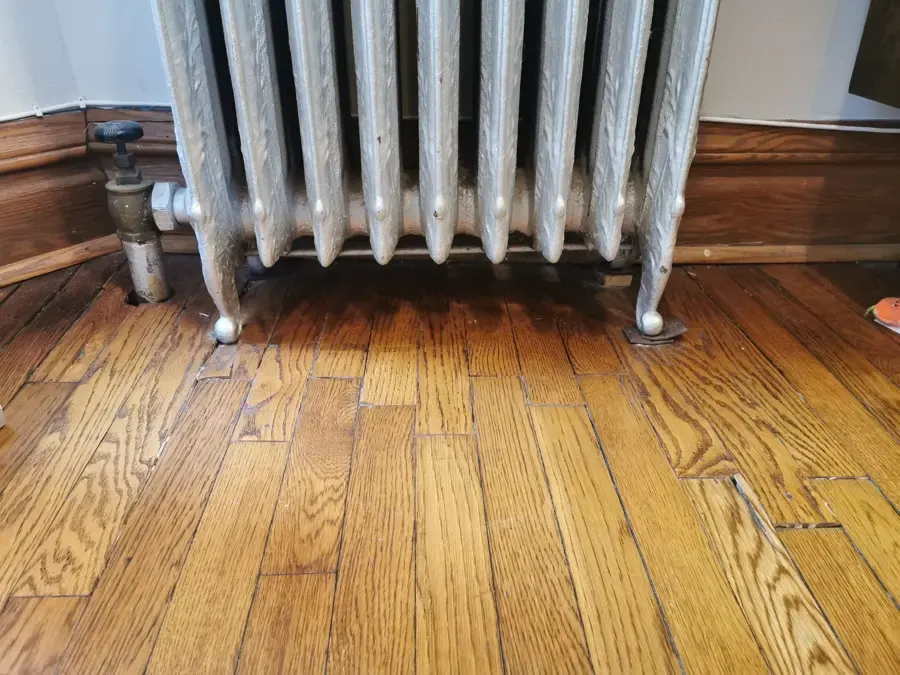
Lower the thermostat and, for a boiler leak, switch the boiler off at its service switch.
Towels and a shallow pan under the valve or radiator; do not force a stuck valve.
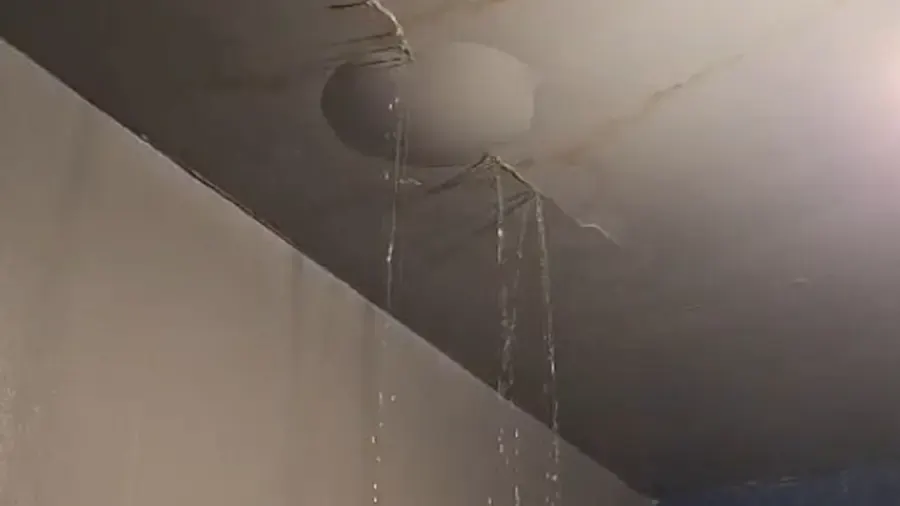
A slow radiator leak often shows first as a stain in the room underneath.
The heating system needs its own repair while the water damage is dried.
The response team covers all of Somerville day and night through the heating season.
Hardwood is dried from above and below with mats and dehumidifiers before anyone talks about replacing it.
Readings from the boards, the subfloor and the ceiling below are logged every day.
One-pipe steam and hot-water baseboard systems are standard in local triple-deckers.
In Somerville, MA, radiator and boiler leak cleanup typically runs $800 to $3,500 for a slow leak under one radiator and $3,500 to $10,000 when the water soaked a hardwood floor and the ceiling below. The size of the wet area, the flooring and how long the leak ran move the cost.
For a planning number on your own loss, try the water damage cost calculator. The final figure comes from the on-site walkthrough and the moisture map.
Pinless meters and thermal imaging map the wet flooring and the ceiling below.
The extraction crew pulls surface water and water between boards with specialty floor tools.
Floor drying mats pull water up through the boards while LGR dehumidifiers keep the air dry.
Daily readings track the boards back toward a dry reference; many cupped floors flatten again.
Radiator and boiler leak cleanup is a Somerville specialty because so much of the housing still heats with cast-iron radiators on steam or hot-water systems. These systems are durable, but valves, air vents, unions and old boiler fittings leak. The leaks are often slow, and slow leaks under a radiator can soak a hardwood floor and the ceiling below for weeks before anyone notices.
Boiler water sits in iron piping for years and carries rust and treatment chemicals, so it is often treated as Category 2 rather than clean water.
Old-growth oak and softwood floors are part of what makes Somerville homes valuable, and water under a radiator makes them cup. Cupping does not mean replacement. The drying team uses floor drying mats that pull water up through the boards, with LGR dehumidifiers and air movers keeping the room dry. Readings from the boards and subfloor are taken daily, and many floors flatten back as they reach the drying goal and can be refinished instead of replaced.
In a stacked building, the room under a leaking radiator usually shows a brown ring on the plaster ceiling. Thermal imaging shows how wet the ceiling is and whether it can be dried in place. See structural drying for how plaster is handled, and condo unit leaks when the room below belongs to a neighbor. The Energy Saver pages and the EPA indoor air quality pages cover heating systems and damp rooms.
The Somerville restoration crew works 02143, 02144 and 02145, from Union Square and Winter Hill to Davis Square and Ten Hills, plus nearby Cambridge, Medford, Arlington, Charlestown, Everett.
See every Somerville neighborhood coveredA small drip is urgent rather than an emergency, but it soaks the floor and ceiling below over time. A hot-water system that is pouring water is an emergency.
Often, yes. Floor drying mats and dehumidifiers pull the water out, and boards that flatten can usually be sanded and refinished.
It sits in iron pipes for years and carries rust and treatment chemicals, so it is usually handled as Category 2 water.
Keep the building safe from freezing, but have a heating technician fix the leak. Drying can run while the system is repaired.
Hardwood usually takes longer than drywall, often five to ten days, depending on how long it was wet and the subfloor below.
Sudden leaks are commonly covered, while slow leaks over time may be excluded. Coverage depends on your policy, so it is worth checking with your own insurer.
Slow radiator leaks soak hardwood and the ceiling below for weeks. Drying mats and daily readings often save floors that look ruined.