$1,000 to $4,500
One wall, caught quickly
- Extraction and cavity drying
- Small access openings
- Three to five days
Pipes on the back walls and porches of Somerville triple-deckers freeze in a hard cold snap and leak when they thaw. The drying team extracts the water and dries the wall cavities and floors below to a verified reading.
(888) 629-3140Frozen pipe split? Call now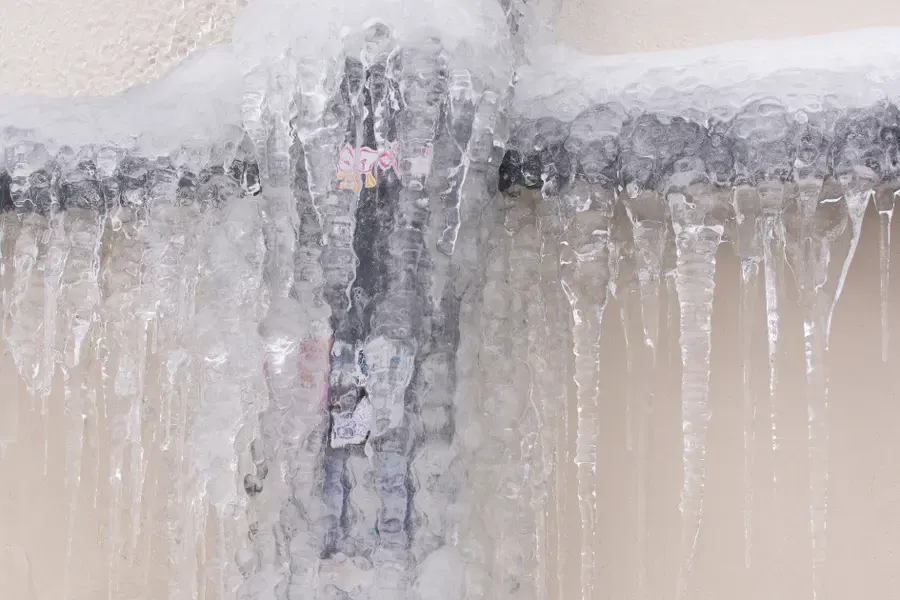
Close the main before thawing a frozen pipe; the split often only shows once ice melts.
Warm the room or use a hair dryer on the pipe. Never an open flame.
Warm air reaches pipes under sinks on exterior walls.
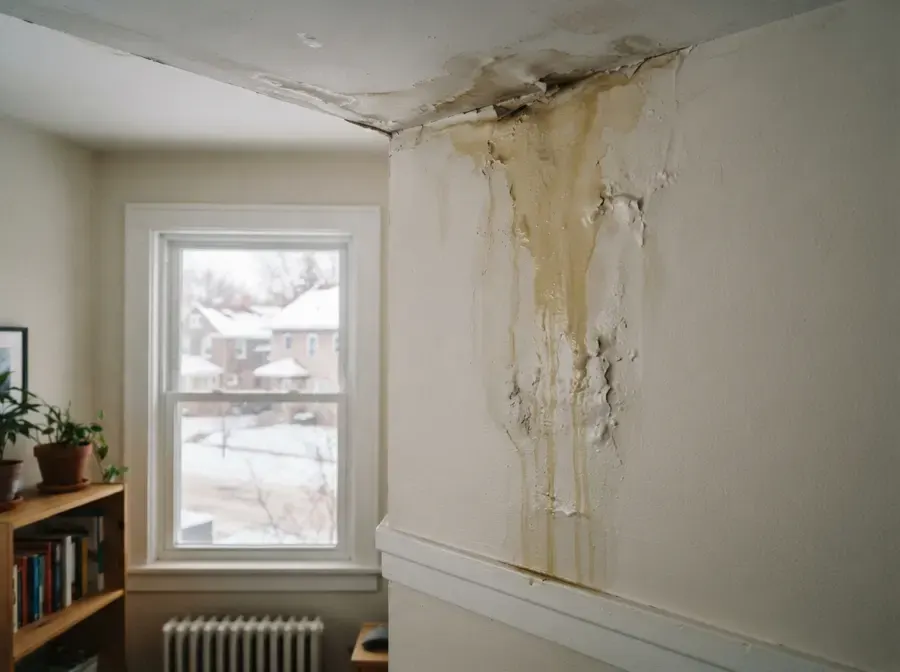
Look at the ceiling under the pipe and take photos of every wet spot.
Cold snaps bring many calls at once across Somerville, and the response team keeps working through the night.
Exterior wall cavities are cold and slow to dry, so equipment runs until readings, not a date, say dry.
The frozen section, the split and the wet areas are photographed before repairs.
Rear kitchens, enclosed back porches and uninsulated walls on triple-deckers are where most freezes happen.
In Somerville, MA, frozen pipe water damage typically runs $1,000 to $4,500 for a split caught quickly in one room and $4,500 to $13,000 when water ran through a wall into the floors below. How long the pipe leaked, how many floors it reached and the wall materials set the cost.
For a planning number on your own loss, try the water damage cost calculator. The final figure comes from the on-site walkthrough and the moisture map.
Thermal imaging shows both the wet areas and the cold spots where the pipe froze.
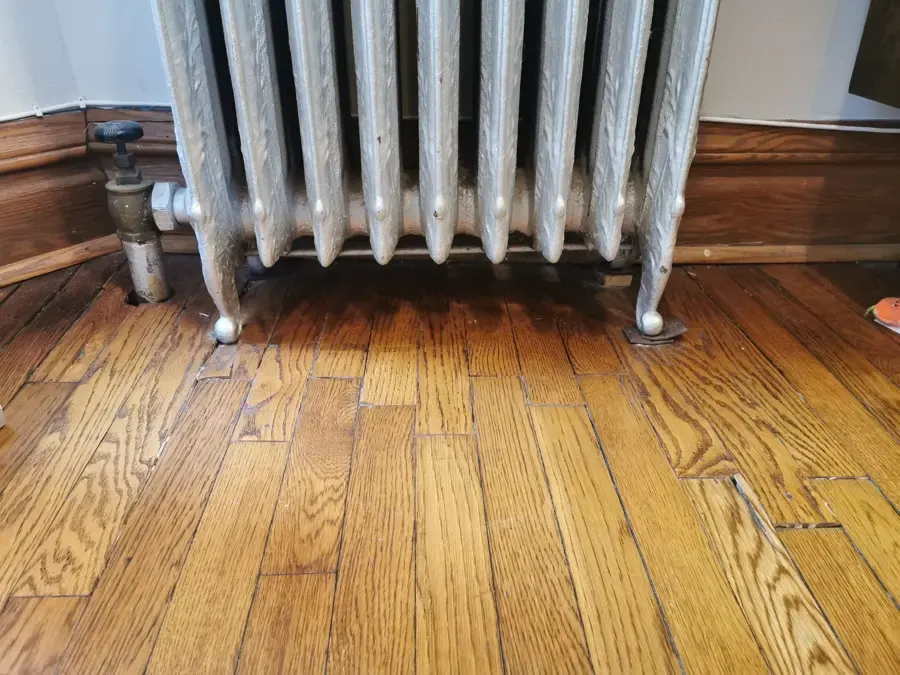
The extraction crew removes water from floors, carpet and the ceiling below.
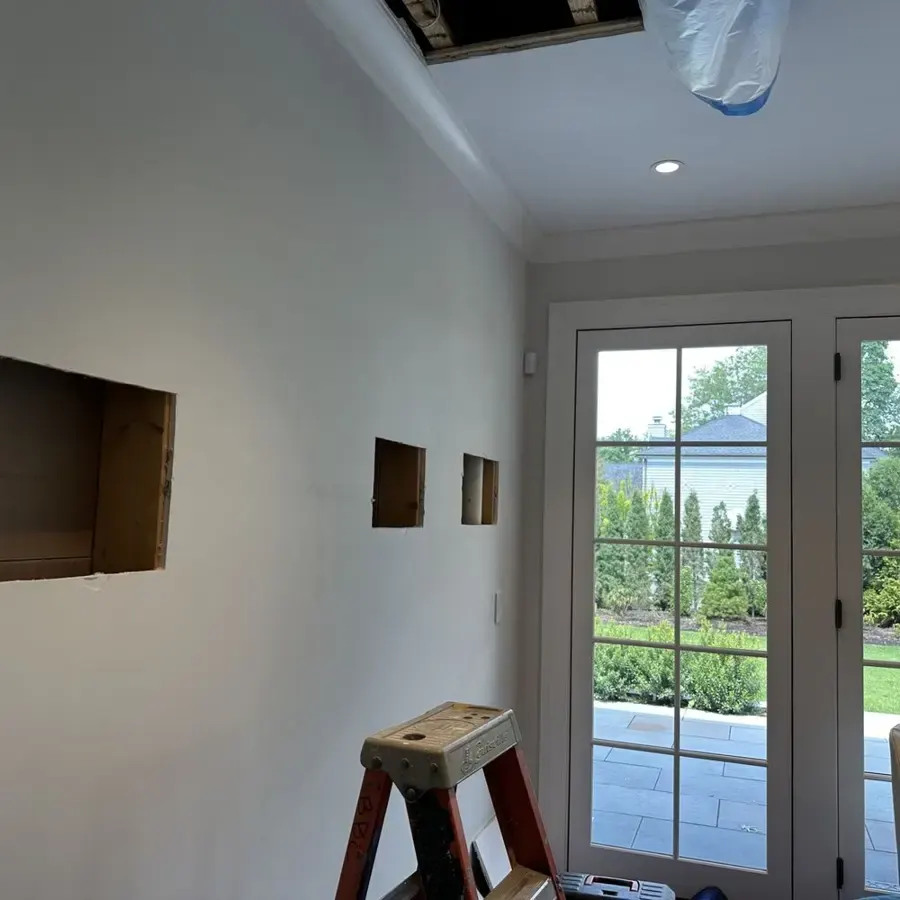
Access openings let air movers and dehumidifiers dry the exterior wall cavity.
The drying team logs readings daily until framing and plaster reach the drying goal.
Frozen pipe water damage is the classic Somerville winter loss. Triple-deckers were built with kitchens and bathrooms stacked at the back of the house, often against exterior walls with little or no insulation, and many have enclosed back porches with plumbing running through them. When a cold snap drops temperatures into single digits, those pipes freeze, the ice expands and the pipe splits.
A frozen pipe rarely leaks while it is frozen. The split shows up when the ice melts and pressure returns, often hours later, sometimes while nobody is home. By then water may have run inside the wall and through the ceiling below. That is why the first step is closing the main before thawing.
Exterior walls are cold, and cold materials dry slowly. The drying team maps moisture with thermal imaging and pinless meters, opens small access points where needed, and pushes warm, dry air into the cavity with air movers and LGR dehumidifiers. Daily readings compare the wet framing with a dry reference, and the equipment stays until they match. If water reached the unit below, both units dry together; see burst pipe water damage.
Keep heat at a steady temperature on cold nights, open cabinet doors on exterior walls, and let a faucet drip during deep cold. Insulating pipes in porches and stairwells helps most. The Ready.gov winter weather page and the National Weather Service cold safety page have more. The frozen pipe risk check rates your own setup.
The Somerville restoration crew works 02143, 02144 and 02145, from Union Square and Winter Hill to Davis Square and Ten Hills, plus nearby Cambridge, Medford, Arlington, Charlestown, Everett.
See every Somerville neighborhood coveredPipes in exposed spots can freeze when outdoor temperatures drop into the low 20s or below, especially overnight and in wind.
The split forms while frozen, but water only escapes once the ice melts and pressure returns.
Close the main first, then warm the area or use a hair dryer. Never use an open flame, and stop if water appears.
Supply lines in rear kitchens and bathrooms on exterior walls, and pipes running through enclosed back porches or stairwells.
Three to five days for a contained loss is typical. Cold exterior walls and plaster can take longer.
It is commonly covered if reasonable heat was maintained, but policies vary, especially for vacant units. Coverage depends on your policy, so it is worth checking with your own insurer.
The leak often starts when the pipe thaws. Catching it early keeps the water out of the ceiling below.